Traditional Karate
Weekly Newsletter • 12 April 2026
Weekly Update from Wadō-Ryū Benkyō
Hello, welcome to your 18th weekly update from Wadō-Ryū Benkyō. Below you’ll find this Saturday’s training review, this week’s long-format video, a featured article, and upcoming course updates.
🥋 1. Saturday Benkyō Class Review
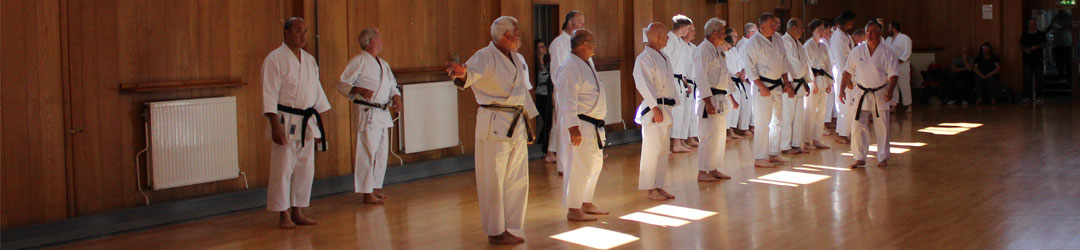
Saturday Benkyō – 11th April
We began the session with Kihon Keri Waza, focusing on the importance of foot positioning and body organisation. Drawing on principles outlined by Takamizawa Sensei, the emphasis was on avoiding common habits such as dragging the rear foot and ensuring the toes are actively lifted.
A key theme was kicking within movement, allowing the technique to develop naturally rather than as a separate action. Just as important was the return of the kicking foot — bringing it back to a position where it can be used again, or directed appropriately depending on the situation.
Particular attention was given to body position before and after the kick. Rather than rising up artificially at the end of the technique, the aim was to allow the movement to flow directly into the landing position of Tate Seishan Dachi. Maintaining the body in a “kicking position” allows for multiple kicks if required and creates a much smoother and more natural transition forward.
We also looked at Ushiro Geri, where a common issue is over-adjusting the front foot. Instead of stepping too wide or pulling it back, the focus was on maintaining ma-ai and forward intention by rotating on the ball of the front foot, while the rear foot moves quickly into position. This not only improves speed by reducing unnecessary movement, but also helps maintain a consistent central line towards the target.
After kihon, we moved on to Jitte Kata.
Following a brief run-through, we focused on the opening sequence, using jujutsu-based applications to better understand the body mechanics involved. The emphasis was on creating kuzushi through body weight shifting, and using both hands together to break and control a grab.
We then returned to the kata itself, applying the same principles through more traditional karate movement — dropping the body, moving from the centre, and allowing the body to deliver the technique rather than relying on the arms alone.
From Jitte, we moved on to its sister kata, Jion. Again, after a run-through, we explored similar applications, this time blending jujutsu principles with striking, helping to connect the two approaches and complete the picture.
The second half of the session focused on Kihon Kumite Nos. 1, 2, and 3, with particular attention to movement, body control, and managing ma-ai.
To reinforce this, we initially removed the arms entirely and worked only on body movement — ensuring that each action finished in the correct position, with a clear understanding of Taisabaki, Ten-gi, Ten-i, and Ten-tai.
It is easy in Wadō-Ryū to become distracted by what the arms are doing, but in reality very little happens in isolation. By focusing on the body first, we were able to establish correct positioning and movement patterns before reintroducing the arms.
Once the arm movements were added back in, the improvement across the class was very noticeable.
This is a valuable method of training — breaking techniques down, removing unnecessary complexity, and focusing on the essential components of each waza before putting everything back together. Another excellent Benkyō session, and great to welcome visitors training with us again over the weekend.
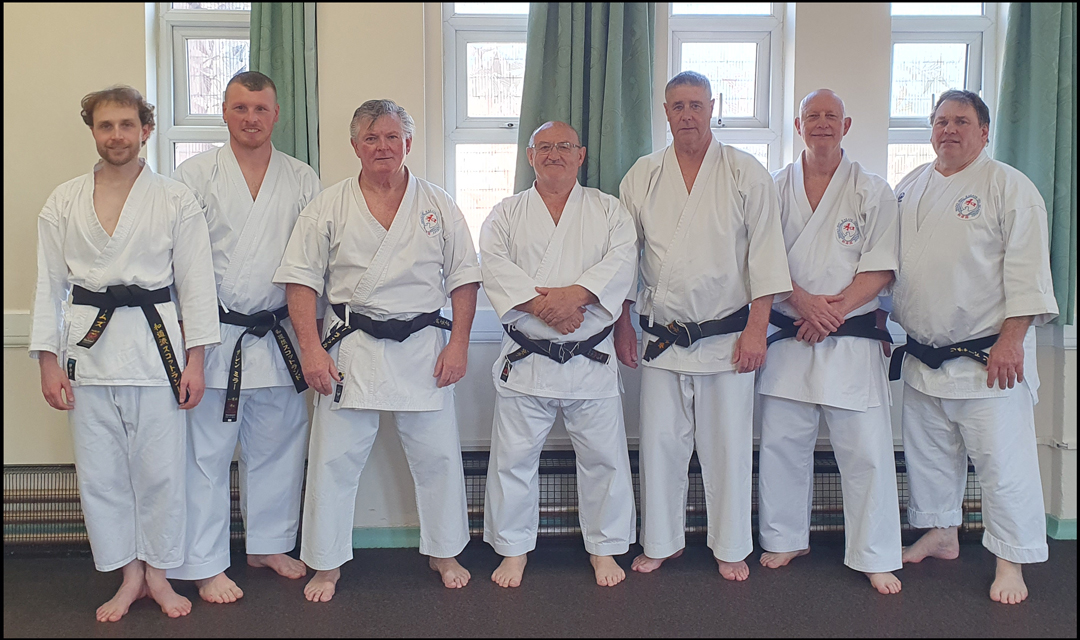
Saturday sessions run throughout 2026. There will be no training next Saturday, but if you would like to attend a Saturday session for the first time, please get in touch and check the events calendar for future session dates.
🎥 2. This Week’s Long-Format Video
Part 26 - Kihon Fundamentals - Technical Breakdown Part 1
Kihon Fundamentals – Part 26: Notsukomi in Application (Dōsa & Body Mechanics)
Technical Breakdown with K Moore Sensei (4th Dan)
In this volume of the Kihon Fundamentals series, we explore how Junzuki Notsukomi and Gyakuzuki Notsukomi can be developed beyond kihon and applied in a more practical context.
These techniques can often feel unusual in basic practice, but when understood correctly, they become highly effective. This session introduces key principles such as Dōsa (fundamental movement), body connectivity, and the role of internal muscle chains — including the deep front line and spiral lines — in generating power without relying on muscular strength alone.
We also examine important Wadō concepts such as datsuryoku (relaxation), ryūsui (flow), shizumu (dropping), and omomi (weight), and how these contribute to more natural, efficient movement.
A key theme throughout is the importance of correct repetition — building strong foundations in kihon so that movement becomes natural, fluid, and transferable into kata, partner work, and kumite.
The session concludes with practical drills to help bridge the gap between structured basics and live application, encouraging movement that is less rigid and more adaptable.
Key areas explored include:
- Understanding Notsukomi techniques as practical movement, not just kihon
- Introduction to Dōsa and fundamental body mechanics
- Using body connectivity and muscle chains for effective technique
- Applying Wadō principles such as datsuryoku, ryūsui, and shizumu
- The importance of correct repetition and habit formation
- Bridging kihon, kata, and kumite through applied drills
As with all volumes in the series, the aim is not to complicate technique, but to refine it — allowing natural, efficient Wadō movement to emerge through correct understanding and consistent practice.
📝 3. Featured Article of the Week
Ippon Kumite No.4 – Yonhon Me: Pinan Nidan, Open the Door, Let the Attack Pass Through
Article: Read the full article on the website
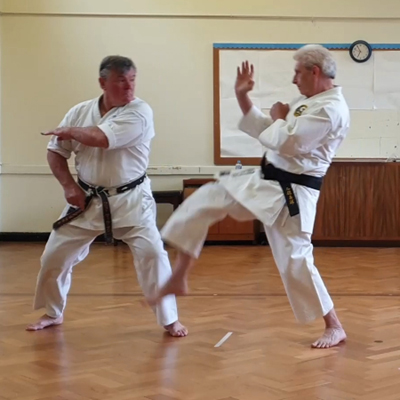
This week’s article explores Ippon Kumite No.4, based on movements from Pinan Nidan, and looks at how angle, entry, and body movement combine to create effective technique in Wadō-Ryū.
The emphasis is on moving off the centre line, using the body to drive the technique, and adapting to what is felt rather than following a fixed pattern. As the sequence develops, the focus shifts from simple defence to control — using connection, positioning, and timing to create kuzushi and disrupt the opponent’s structure.
Two variations of the final movement are examined, both demonstrating how subtle changes in angle and pressure can produce a significant collapse in the opponent’s posture.
A valuable study in how kata translates into paired application, and how effective Wadō technique relies on movement, structure, and sensitivity rather than force.
📅 4. Upcoming Courses, Events, or Updates
Things you may want to know about:
- The course and events calendar is now live on the website and will be updated regularly, so please bookmark it and check it.
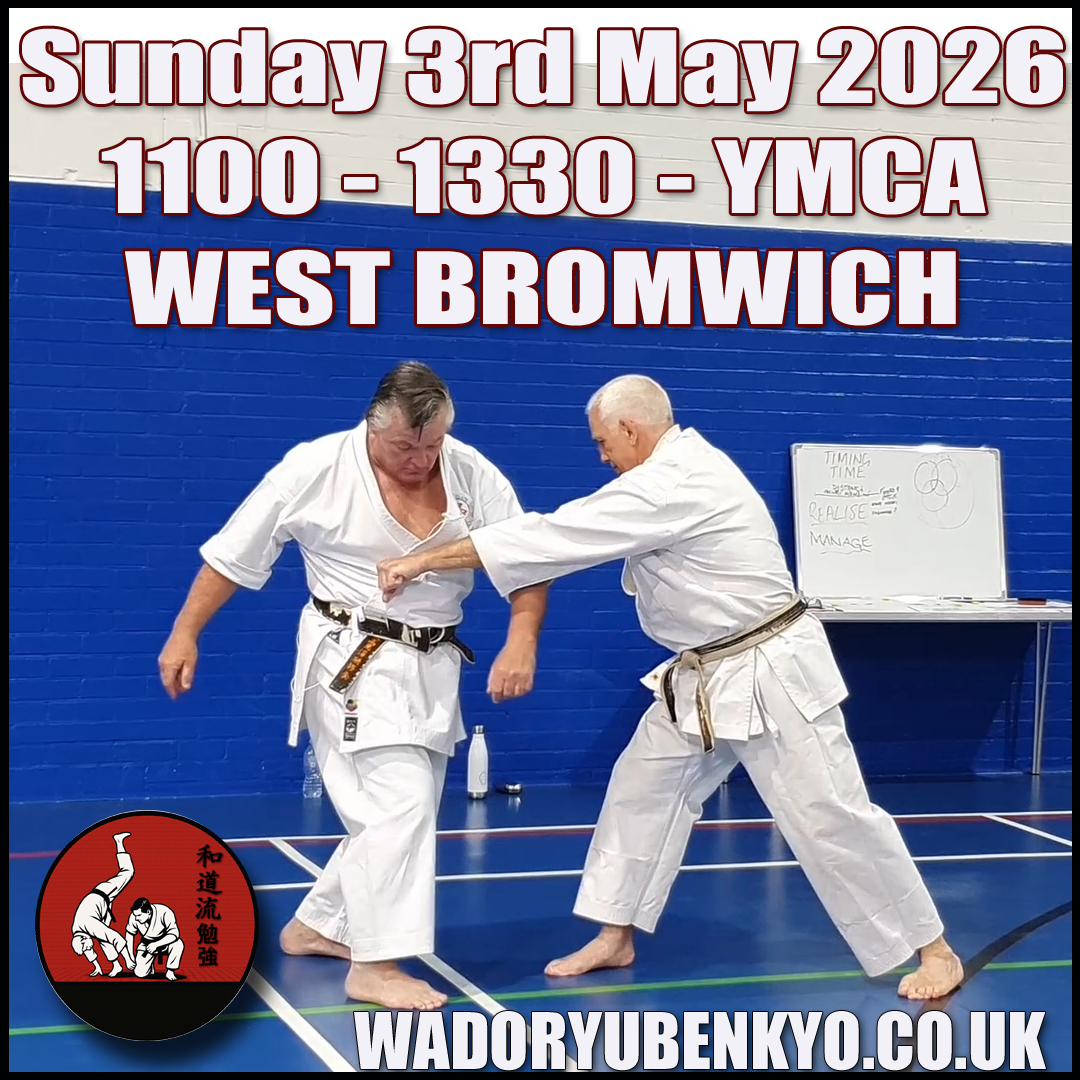
- The May 2026 course date and location have been confirmed, and you can see the details and book here.
🙏 Thank You for Being Part of the Community
If you have any questions, video requests, or feedback, simply get in touch — we read everything.
Wishing you a fantastic week of training,
Roger and The Team
Wadō-Ryū Benkyō
wadoryubenkyo.co.uk
If you no longer wish to receive these weekly updates, simply reply with “UNSUBSCRIBE” and we will remove you from the mailing list.